Archive for November, 2011

Take Time to De-Stress During the Holidays With a Quick Local Getaway

Posted on: November 18th, 2011 by royalcoachmanww No Comments

Did you know that New Jersey has 15 shore towns? If you like to plan your vacations early for when the warm weather returns, or if you prefer that cool crispy air as the water washes ashore keep these in mind for your next getaway.  Our transportation experts are available to help you plan your trip with ease.

Here are some of the top spots in New Jersey for a quick weekend getaway, perfect to de-stress during the holidays:

  • Cape May: Most romantic relaxing Couples getaway and best seafood in a NJ Shore Town
  • Ocean Grove: Best getaway shore town for mature couples
  • Atlantic City: Fun Romantic couples getaway
  • Avon by the sea: If you love the quiet open sea, then Avon-by-the-Sea is the place for you and your loved one.
  • Avalon : Best Quiet beach town in NJ
  • Sea Girt: Best Overall relaxing Beach town in NJ
  • Spring Lake: Most picturesque Northern Seaside town
  • Sunset Beach: Coolest Novelty beach in NJ…only place on the East coast to see a fully unobstructed sunset

The best noted spots for family vacations are:

  • Ocean City: #1 getaway shore town for Families
  • Point Pleasant: Best overall NJ shore getaway
  • Wildwoods: Wildest Adventure – Biggest Boardwalk for kids down the NJ Shore
  • Long Beach Island: Perfect NJ Shore family getaway
  • Seaside Heights: Best seediest (seedy in a good way!) and classic old time ambience getaway down the NJ shore
  • Belmar: Best NJ shore town for the younger party crowd - best NJ nightlife getaway
  • Stone Harbor: Quiet relaxing shore town getaway
  • Sea Isle City: Best uncrowded – unknown beach in NJ

For a truly stress free experience, give us a call and we can get you to and from your weekend retreat.  Our drivers are the best in the business and anticipate your needs before you do.

To read more specifics about these areas visit here.

The Neon Lights are Always Bright with Royal Coachman!

Posted on: November 11th, 2011 by royalcoachmanww No Comments

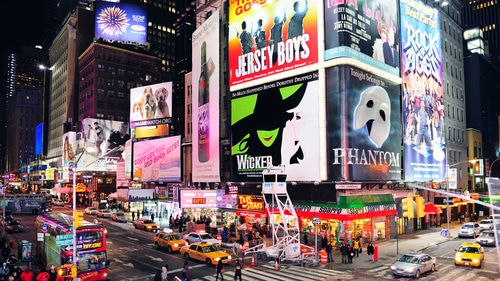
Photo credit: Songquan Deng, Shutterstock.com

Broadway theatre, commonly called Broadway, refers to theatrical performances presented in one of the 40 professional theatres with 500 or more seats located in the Theatre District centered along Broadway, and in Lincoln Center, in Manhattan in New York City. If you are lucky enough to catch a show while visiting the city, or have free time to indulge yourself this is part of the true New York experience. It wasn’t always the Broadway we know today. Here is a brief history of a place that is unforgettable in all our minds.  Royal Coachman specializes in creating unique experiences combining our white glove limo service to some of the areas best and brightest shows.  We can even customize your experience to include some of the best the holidays have to offer, just give us a call.

Ever wonder where it all started though?

Early New York Theatre

New York did not have a significant theatre presence until about 1750, when actor-managers Walter Murray and Thomas Kean established a resident theatre company at the Theatre on Nassau Street, which held about 280 people. They presented Shakespeare plays and ballad operas . The Revolutionary War suspended theatre in New York but thereafter theatre resumed in 1798. Theatre in New York moved from downtown gradually to midtown beginning around 1850, by 1870 the heart of Broadway was in Union Square, and by the end of the century, many theatres were near Madison Square. Theatres did not arrive in the Times Square area until the early 1900s, and the Broadway theatres did not consolidate there until a large number of theatres were built around the square in the 1920s and 1930s.


Birth of the Musical and Post-Civil War

The first theatre piece that conforms to the modern conception of a musical, adding dance and original music that helped to tell the story, is considered to be The Black Crook, which premiered in New York on September 12, 1866. The production was a staggering five-and-a-half hours long, but despite its length, it ran for a record-breaking 474 performances. The same year, The Black Domino/Between You, Me and the Post was the first show to call itself a “musical comedy.” Tony Pastor opened the first vaudeville theatre one block east of Union Square in 1881 As transportation improved, poverty in New York diminished, and street lighting made for safer travel at night, the number of potential patrons for the growing number of theatres increased enormously. Plays could run longer and still draw in the audiences, leading to better profits and improved production values.


1890s and Later

In the early years of the 20th century, translations of popular late-19th century continental operettas were joined by the “Princess Theatre” shows of the 1910s by writers such as P. G. Wodehouse, Guy Bolton and Harry B. Smith. Victor Herbert, whose work included some intimate musical plays with modern settings as well as his string of famous operettas (The Fortune Teller (1898), Babes in Toyland (1903), Mlle. Modiste (1905), The Red Mill (1906), and Naughty Marietta (1910)). Beginning with The Red Mill, Broadway shows installed electric signs outside the theatres. Since colored bulbs burned out too quickly, white lights were used, and Broadway was nicknamed “The Great White Way.” In August 1919.

The motion picture mounted a challenge to the stage. At first, films were silent and presented only limited competition. Nevertheless, by the end of the 1920s, films like The Jazz Singer could be presented with synchronized sound, and critics wondered if the cinema would replace live theatre altogether. The musicals of the Roaring Twenties, borrowing from vaudeville, music hall and other light entertainments, tended to ignore plot in favor of emphasizing star actors and actresses, big dance routines, and popular songs Broadway theatre entered a golden age with the blockbuster hit Oklahoma!, in 1943, which ran for 2,212 performances. The Tony Awards were established in 1947 to recognize achievement in live American theatre, especially Broadway theatre.

Broadway Today

Both musicals and stage plays on Broadway often rely on casting well-known performers in leading roles to draw larger audiences or bring in new audience members to the theatre. Actors from movies and television are frequently cast for the revivals of Broadway shows or are used to replace actors leaving a cast. There are still, however, performers who are primarily stage actors, spending most of their time “on the boards”, and appearing in television and in screen roles only secondarily.

Most Broadway shows are commercial productions intended to make a profit for the producers and investors (“backers” or “angels”), and therefore have open-ended runs (duration that the production plays), meaning that the length of their presentation is not set beforehand, but depends on critical response, word of mouth, and the effectiveness of the show’s advertising, all of which determine ticket sales. Historically, musicals on Broadway tend to have longer runs than “straight” (i.e. non-musical) plays. On January 9, 2006, The Phantom of the Opera at the Majestic Theatre became the longest running Broadway musical, with 7,486 performances, overtaking Cats.

New York City’s TKTS (pronounced “Tee-Kay Tee-Ess”) is operated by the Theatre Development Fund. There are three locations: one in Duffy Square (at 47th Street and Broadway, the north end of Times Square); another at South Street Seaport in Lower Manhattan (replacing the office formerly located in the lobby of the World Trade Center, which was destroyed in the September 11, 2001 terrorist attacks); and a third in Downtown Brooklyn (Jay St. and Myrtle St. Promenade) The Times Square booth sells day-of-performance tickets only, while the South Street Seaport booth sells tickets to evening performances on the day of the performance and matinee tickets the day before.

Adapted from  http://en.wikipedia.org/wiki/Broadway_theatre

Whatever shows you decide to see, give us a call and we can create the one-of-a-kind theater experience you deserve.

New Jersey Boy Gives Back To His Hometown

Posted on: November 4th, 2011 by royalcoachmanww No Comments

limo service njAs Thanksgiving approaches, our hearts and thoughts turn to gratitude and ways we can give back.  Many volunteer at soup kitchens or shelters, but Jon Bon Jovi took that a step further.

A hometown boy, no matter how brightly his star has shone, Jon Bon Jovi has made no secret of the fact that he was born and raised in New Jersey and his heart belongs there.

Bon Jovi has packed stadiums across the country and around the world. He has acted in movies, been on stage and sold more albums than many others who have been rocking as long as he has. But always his home has been New Jersey and his interests have come back to it again and again.

Bon Jovi has also made it his mission lately to find ways of helping the people in need in his old community without talking down to them or simply offering a handout. In 2006 he created the Jon Bon Jovi Soul Foundation which has pledged to find a new way to help families and individuals in need of a helping hand. His altruism has been mostly done in secret, except for his recent endeavor.

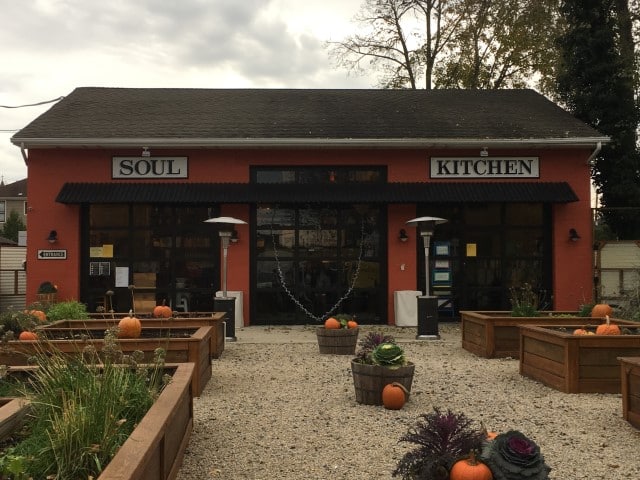
Recently,  Bon Jovi opened his first restaurant aimed at helping people in need of a good meal, but without being labeled another “soup kitchen.”

Called, “The Soul Kitchen,” an extension of his Jon Bon Jovi Soul Foundation, Bon Jovi’s new restaurant is a bit different than most places which provide a charitable meal. Guests can come in, get a good, hot meal and simply pay what they wish. If they have nothing to pay with they are encouraged to volunteer their time at The Soul Kitchen in lieu of payment, making the experimental restaurant the first of its kind. If they can afford to donate a few dollars (or more) for their meal they are encouraged to do that too.

Either way, it’s a win-win situation with the rocker picking up the tab for whatever might not be covered. Volunteers can work at the restaurant washing dishes, bussing tables or even working in the kitchen to prepare meals for other patrons. Visitors are also encouraged to volunteer at the Lunch Break organization in Monmouth County, or even the local food bank. All volunteers are eligible to receive a coupon for a free meal at The Soul Kitchen.

There are envelopes on every table which patrons can use to make a donation. There are prices on the menu but everyone is encouraged to leave what they can afford  and/or what they feel appropriate for the meal they received.

Here is a recent video about The Soul Kitchen:

Bon Jovi has said he fully supports the project and has already been spotted there a few times, working in back washing dishes. Diners shouldn’t expect to find him in the kitchen, however, as he admits he has no talent as a cook. But whether he cooks the meals or just supports the project The Soul Kitchen is reinventing the way our communities can support those in need without the stigma often attached to programs that offer help.

Bon Jovi has said he hopes to take the model of The Soul Kitchen and replicate it in other cities. If it turns into the success he said he hopes it will become then it seems likely The Soul Kitchen will be popping up all over the country.

So this month, why not make one of your nights out have a little more meaning?  Let Royal Coachman provide the limo service to get you to and from The Soul Kitchen.